Introductory Note:
Farmers are the backbone of any society—more so in an agriculture-dominated country like India. They provide food, and do so through practices that increasingly demand knowledge ranging from traditional farming to modern farming.
Farmers’ knowledge has been the silent, unsung pillar of the ecosystem—we value the produce but not the knowledge behind that produce.
In order to recognize and certify the knowledge of farmers with a view to empowering them, SSSUHE has decided to undertake a pioneering initiative of defining their knowledge and skills, evaluating them, and certifying them based on international best practices.
Accordingly, in the first instance, it has drafted the competence criteria and the evaluation and certification process for organic ragi (finger millet) farmers, covering both individual farmers and farmer families who collectively demonstrate the defined competence.
The draft voluntary certification system is now being placed in the public domain to invite comments from stakeholders for a period of two months, after which it shall be finalized by the expert group constituted for the purpose and the certification programme formally rolled out.
Mr. Anil Jauhri
ex-CEO, NABCB
Chairman, Farmer Certification Framework Committee (SSSUHE Vision 2035)
Who Can Apply:
Individual farmers having knowledge of organic ragi
Farmer families, where different family members are involved in ragi cultivation activities
Participation is completely voluntary.
What the Certification Covers:
The certification checks the farmer’s:
Certification Process (Simple Steps) :
If you wish to submit your comments using the Word document, please use the prescribed template to record your inputs and email the completed document to
farmer.certification@sssuhe.ac.in
The logo and Its Significance:
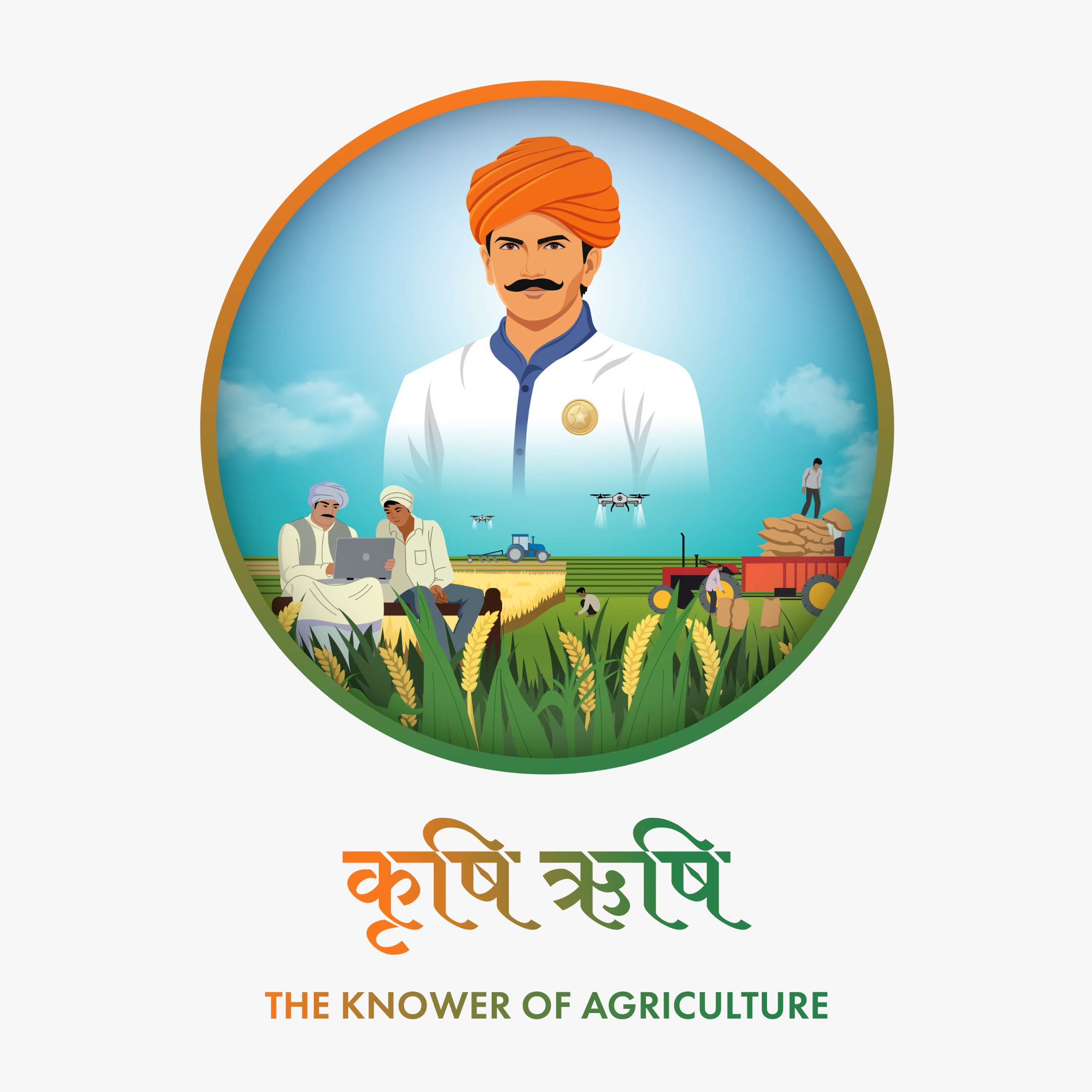
The logo of the Voluntary Farmers Certification Scheme symbolises the farmer as the ‘Knower of Agriculture (kṛṣi ṛṣi)’. Just as a ṛṣi realises the Self through complete identification, the farmer becomes one with his soil and seeds through lived experience and dedication to agriculture.
The imposing figure of the farmer, wearing a turban and soaring above the landscape, represents his unearthly stature and immense value to society. Though he works with the earth, he sustains millions by providing food—the fundamental source of life and energy.
The confident smile reflects the satisfaction of harvest, where each grain carries the energy of Mother Earth, nourishing and rejuvenating life. The lush green agricultural landscape symbolises freshness, prosperity, harmony, abundance, and hope, reflecting nature’s generous and perennial character.
The inclusion of modern tools such as drones, laptops, and advanced machinery highlights the integration of technology in agriculture, enabling efficiency while preserving its soul—rooted in conservation, rejuvenation, fertility, and the joy of growing and giving. The farmer’s digital engagement represents collaboration, connectivity, and collective welfare.
The circular form symbolises the continuity and cyclic nature of agriculture, as well as the unity of land, farmer, family, and community. It reflects the inter-connectedness of life and aligns with the One World, One Family philosophy of Sri Sathya Sai University for Human Excellence.
The colour palette—green, earth tones, and blue—represents growth, sustainability, rootedness, and balance.
Overall, the logo reflects the Scheme’s commitment to honour the dignity of farmers, promote sustainable and effective practices, encourage innovation, and preserve the spirit and joy of farming.